
FOCUS ON THE WALKING ROUTE
Address raised edges without overlooking the surrounding walking surface.
Uneven concrete can interrupt routes between parking and entrances. Choosing a correction means reviewing the raised edge, slab condition, cross slope and signs of continuing movement.
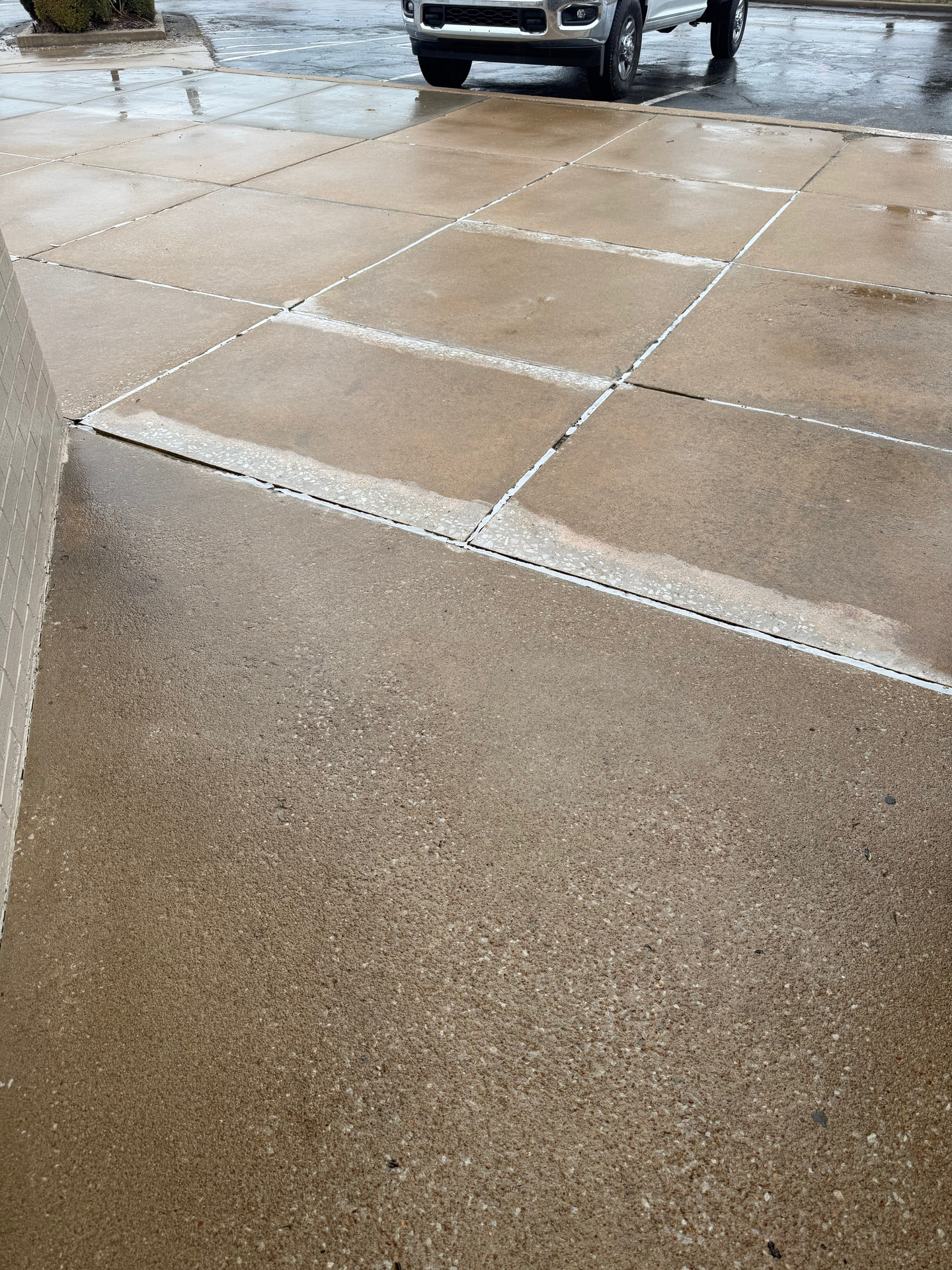
At Prosperity Bank near 21st and Garnett in Tulsa, our Trip Hazard Removal work reduced raised concrete edges along the entrance walkway.

Target abrupt transitions
Improve a raised edge where surrounding concrete remains suitable.

Review the full route
Consider slope, openings and slip resistance alongside the edge.

Understand repair limits
Slab condition and remaining thickness influence the appropriate correction.
Is localized correction the right next step?
Good fit
A localized raised edge with enough sound concrete.
Evaluate first
Large offsets, thin slabs, drainage or recurring movement.
Serving properties in Tulsa, Oklahoma City and Northwest Arkansas.
FAQ
Before you correct the edge.
Is grinding always the right fix?
No. Removing material may leave slope or thickness concerns.
Will the slab stop moving?
A surface correction may not resolve the underlying cause.
Does this ensure ADA compliance?
No. Accessibility requires review of the wider route and applicable requirements.
GET A QUOTE
Tell us about your project and its location so we can understand what you need.
WHAT THE CORRECTION PLAN SHOULD COVER
A clear path from here.
01
Locate and measure
Review transitions and the walking route.
02
Choose the correction
Consider slab condition and thickness.
03
Review the finished route
Identify concerns needing further attention.
Review the walking route, not just one raised edge
Identify uneven joints and abrupt transitions along sidewalks, entrances and other pedestrian routes. Include the approach from both directions, nearby drains and any recurring movement. Measurements and the remaining concrete condition help determine whether a raised edge can be reduced or whether a section needs repair or replacement. Plan a clearly separated alternate route while work is underway.
Choose a correction that fits the condition
Removing a raised edge does not resolve every cause of uneven pavement. Cracked slabs, inadequate support, roots or ongoing settlement may require additional work. Concrete patching or concrete paving can be part of a broader repair plan where surface correction alone is unsuitable. View the project gallery for published RGW work.
Trip Hazard Removal questions
What should a walking-route assessment record?
Record the location and extent of uneven transitions, the condition of the surrounding slab and how people approach the area. Note recurring movement and nearby drainage or roots. Measurements help distinguish a suitable surface correction from a larger repair.
Should nearby transitions be reviewed together?
Yes. An isolated repair should be considered alongside the connected walking route, entrances and changes in slope. Removing one raised edge does not establish that the whole route meets accessibility requirements. Obtain a qualified accessibility review when compliance is in question.
What should the correction scope document?
Identify the specific transitions being addressed, the proposed method and any areas needing separate repair. Clarify how adjoining surfaces, cleanup and the return to pedestrian use will be handled. Keep the agreed work limits clear so a targeted correction is not mistaken for a review of the entire property.
How should pedestrian access be managed during the work?
Identify busy entrances and accessible routes before scheduling. Agree on a clearly separated alternate path and how occupants will be informed. Send the address, route photos and any access constraints with your request. See our Tulsa services page for local service information.
Let’s talk about your property.
Asphalt. Concrete. Ongoing care.
Practical solutions for your property.
LOCATIONS SERVED
Tulsa
Oklahoma City
Northwest Arkansas
Southwest Missouri
Southeast Kansas
© 2026 Regional Groundwork. All rights reserved.