

REPAIR THE RIGHT AREAS
Match the concrete repair to what is failing underneath.
A chipped joint and a broken slab need different repair decisions. Start with damage depth, sound surrounding concrete, and the conditions that caused the failure.
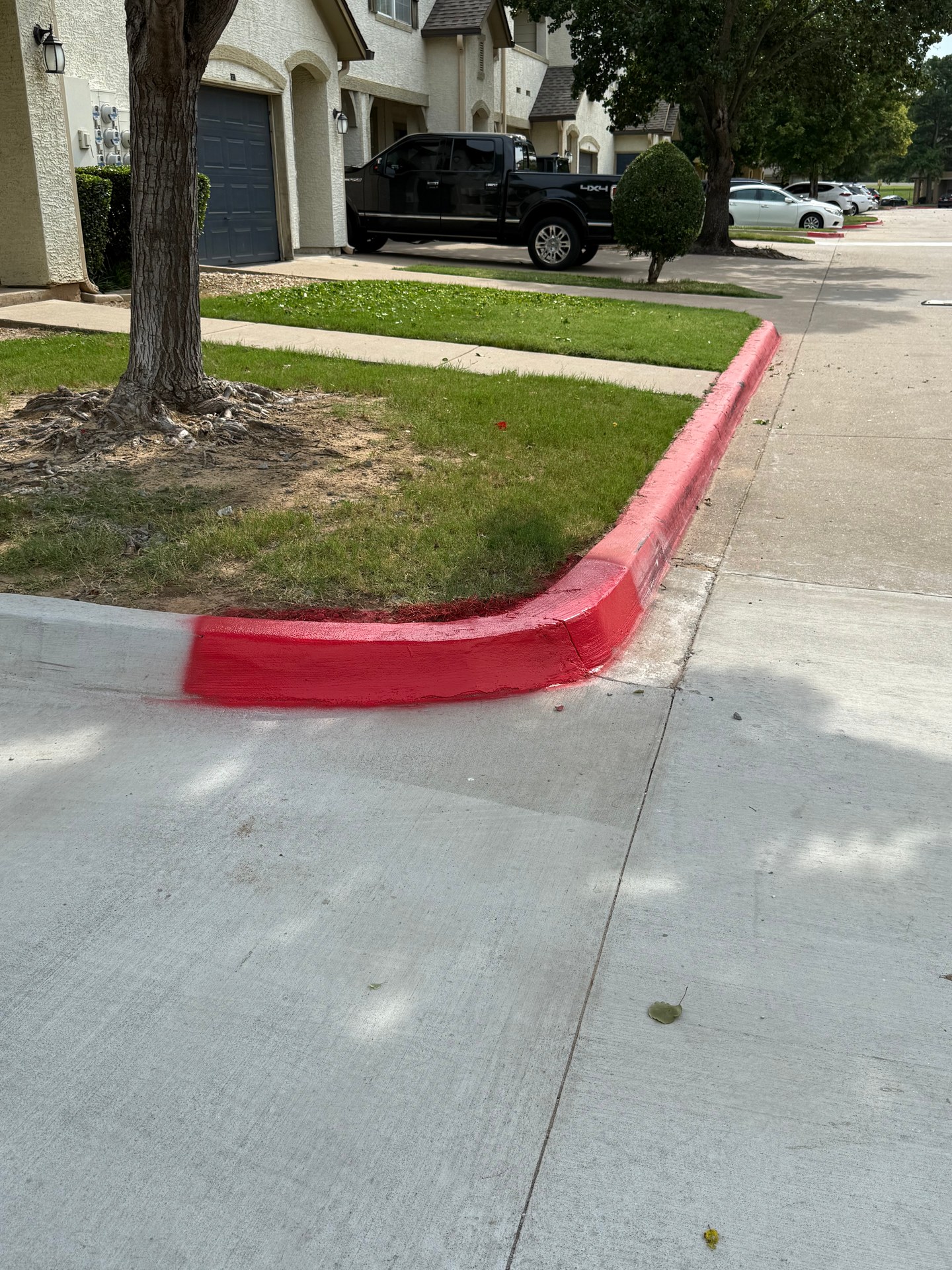
Concrete patching beside a curved curb at The Mansions at Riverside in Tulsa.

Match the repair depth
Separate shallow surface damage from deeper deterioration.

Retain sound pavement
Localized repair can preserve serviceable surrounding concrete.

Consider the joints
Repair boundaries and joints affect performance under traffic.
Is patching the right next step?
Good fit
Isolated damaged areas with serviceable surrounding concrete.
Evaluate first
Widespread cracking, movement, or repeated patch failures.
Serving properties in Tulsa, Oklahoma City and Northwest Arkansas.
FAQ
Before you patch.
Partial-depth or full-depth repair?
Damage limited to the upper slab differs from deterioration through its thickness.
Why can a patch fail again?
Movement or support problems may remain beyond the repaired area.
Can it reopen when it looks dry?
Readiness depends on material, curing, required strength and loading.
GET A QUOTE
Tell us about your project and its location so we can understand what you need.
WHAT THE REPAIR PLAN SHOULD COVER
A clear path from here.
01
Assess the distress
Review damage, joints and likely causes.
02
Define the repair
Match depth and material to the deterioration.
03
Plan the return to use
Account for curing and reopening requirements.
Plan concrete repairs around the damaged area
Show us broken edges, deteriorated surfaces and cracks, along with the surrounding slabs. Note movement, standing water and any previous patch that has come loose. The assessment should distinguish a localized surface repair from deeper damage that may require slab replacement. Plan an alternate pedestrian or vehicle route while preparation, placement and curing take place.
Repair depth matters
Surface damage and full-depth slab failure need different repair approaches. Sound edges, proper preparation and treatment of existing joints matter to the result. Where a larger area is failing, concrete paving may be more appropriate than repeatedly patching small sections. View the project gallery for published RGW work.
Concrete patching questions
What should be checked around the damaged area?
Include adjoining slabs, joint edges and any signs of movement or standing water. A small visible defect can be part of a larger problem. The review should establish the limits of sound concrete and whether support beneath the repair needs attention.
How are existing joints handled during a repair?
The repair plan should account for joints and the movement they accommodate. Filling across a working joint without considering that movement can undermine the repair. Ask how the repaired area connects to the surrounding concrete.
How can I compare concrete repair proposals?
Compare the repair limits, removal depth, preparation, material, joint treatment and reopening requirements. A surface patch and a full-depth replacement are different scopes. Make sure access restrictions and appearance expectations are clear before choosing between proposals.
What should I send for a repair estimate?
Send the address, overall and close-up photos, approximate dimensions and information about vehicles or foot traffic. Identify joint damage, uneven transitions and recurring problems. Trip Hazard Removal may be relevant to raised edges. See our Tulsa services page for local service information.
Let’s talk about your property.
Asphalt. Concrete. Ongoing care.
Practical solutions for your property.
LOCATIONS SERVED
Tulsa
Oklahoma City
Northwest Arkansas
Southwest Missouri
Southeast Kansas
© 2026 Regional Groundwork. All rights reserved.