
COMMERCIAL PAVEMENT PLANNING
Build for the traffic today and the demands ahead.
A smooth surface is only part of a successful paving project. Foundation support, drainage and vehicle loads work together. Plan for customer parking, delivery routes and loading areas—not one generic pavement section.
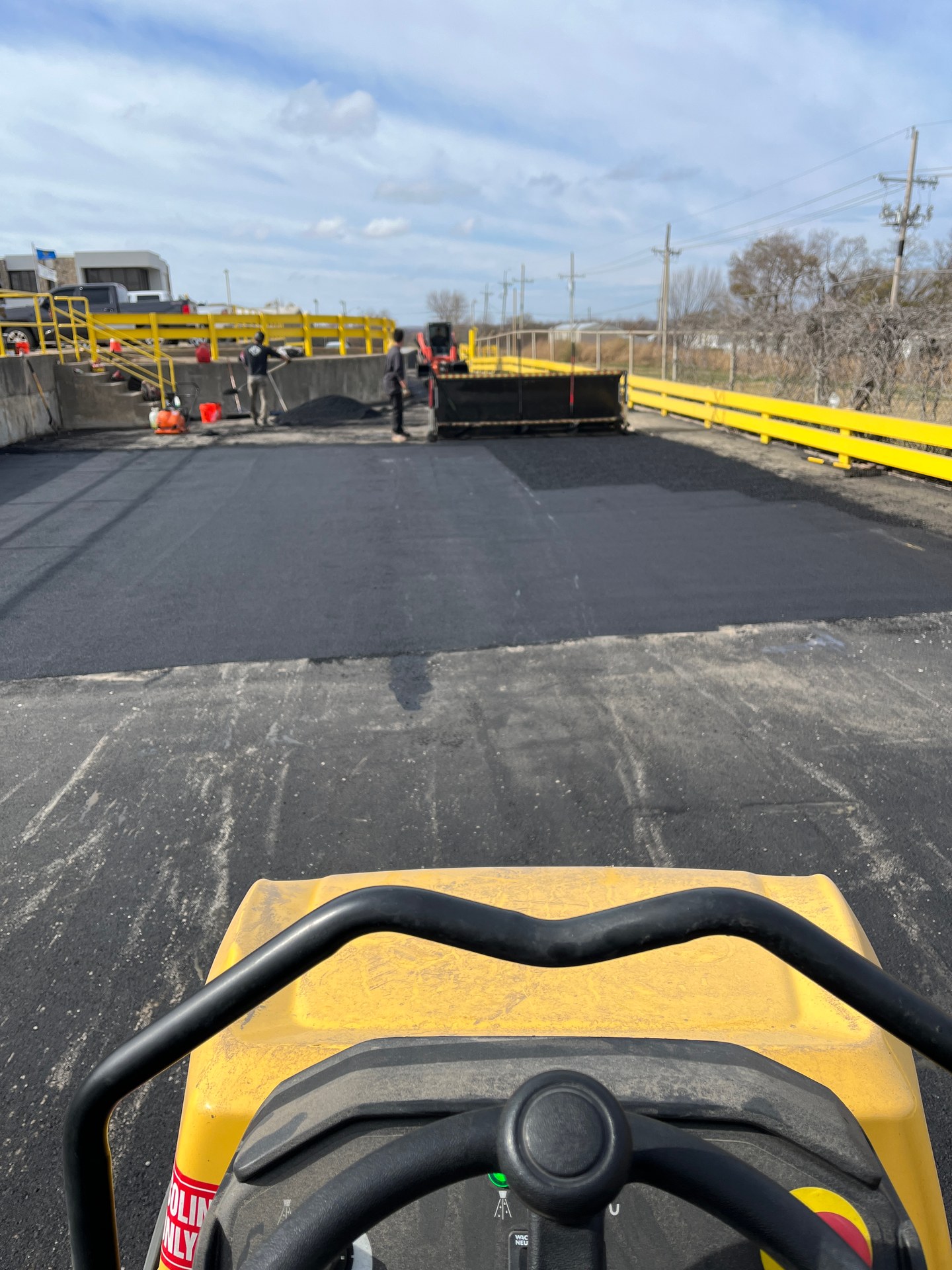
A view from the roller as the crew places asphalt beside yellow safety rails.

Match real traffic
Account for delivery vehicles and heavier service traffic.

Respect the foundation
Evaluate existing pavement and the support underneath.

Plan for water
Review grades, drainage paths and tie-ins before paving.
Is paving the right next step?
Good fit
A new surface or broader rehabilitation with a condition-based scope.
Evaluate first
Soft support, ponding, elevation constraints and heavy truck routes.
Serving properties in Tulsa, Oklahoma City and Northwest Arkansas.
FAQ
Before you pave.
Can new asphalt cover existing pavement?
An overlay needs adequate support and preparation.
Does truck traffic change the plan?
Heavy routes may require a different pavement structure.
Will paving eliminate standing water?
Not automatically. Grades and drainage need review first.
GET A QUOTE
Tell us about your project and its location so we can understand what you need.
A CLEAR, STRAIGHTFORWARD APPROACH.
A clear path from here.
01
Understand the site
Review foundation, drainage and traffic loads.
02
Set the paving scope
Confirm preparation, design needs and property access.
03
Build and transition
Coordinate the approved work, markings and reopening.
Plan paving from the ground up
Start with how the area will be used: passenger parking, delivery routes and heavy turning traffic can have different needs. Review grades, drainage, entrances and transitions to existing pavement before choosing a paving scope. Share utility work and future changes that could disturb the surface. Agree on staging, vehicle relocation and access before construction starts.
Choose the right paving approach
New pavement, an overlay and removal-and-replacement are different projects. An overlay adds a new surface over suitable existing pavement; it does not remove every problem underneath. Localized failures may first need asphalt patching, while widespread weakness can require a more extensive repair plan. View the project gallery for published RGW work.
Asphalt paving questions:
What should a paving proposal spell out?
Look for clear work limits and a distinction between new paving, overlay and removal-and-replacement. The proposal should identify preparation, treatment of failed areas, base work, paving and any striping. Ask what conditions could require a scope change.
How do drainage and tie-ins affect the scope?
New pavement must meet entrances, adjoining surfaces and drainage features at suitable elevations. Adding height can change those relationships. Point out puddles and drainage concerns before a paving approach is selected rather than assuming a new surface will correct them.
How should tenants and deliveries be planned around paving?
Identify the entrances that must remain usable, the heaviest delivery vehicles and peak traffic times. Agree on staging and alternate access before work begins. Obtain project-specific reopening instructions for ordinary traffic, heavy vehicles and the final markings.
What information helps with an estimate?
Provide the address, approximate limits, photos, any plans and the types of vehicles using the area. Identify drainage concerns, entrances and deadlines. Compare the proposed removal, base work, paving and striping scope. See our Tulsa services page for local service information.
Let’s talk about your property.
Asphalt. Concrete. Ongoing care.
Practical solutions for your property.
LOCATIONS SERVED
Tulsa
Oklahoma City
Northwest Arkansas
Southwest Missouri
Southeast Kansas
© 2026 Regional Groundwork. All rights reserved.