
TARGETED PAVEMENT REPAIR
Repair the trouble spots. Keep the bigger picture clear.
Patching targets localized potholes and failed areas. The right repair considers the surrounding pavement, underlying support and drainage—not just the visible damage.
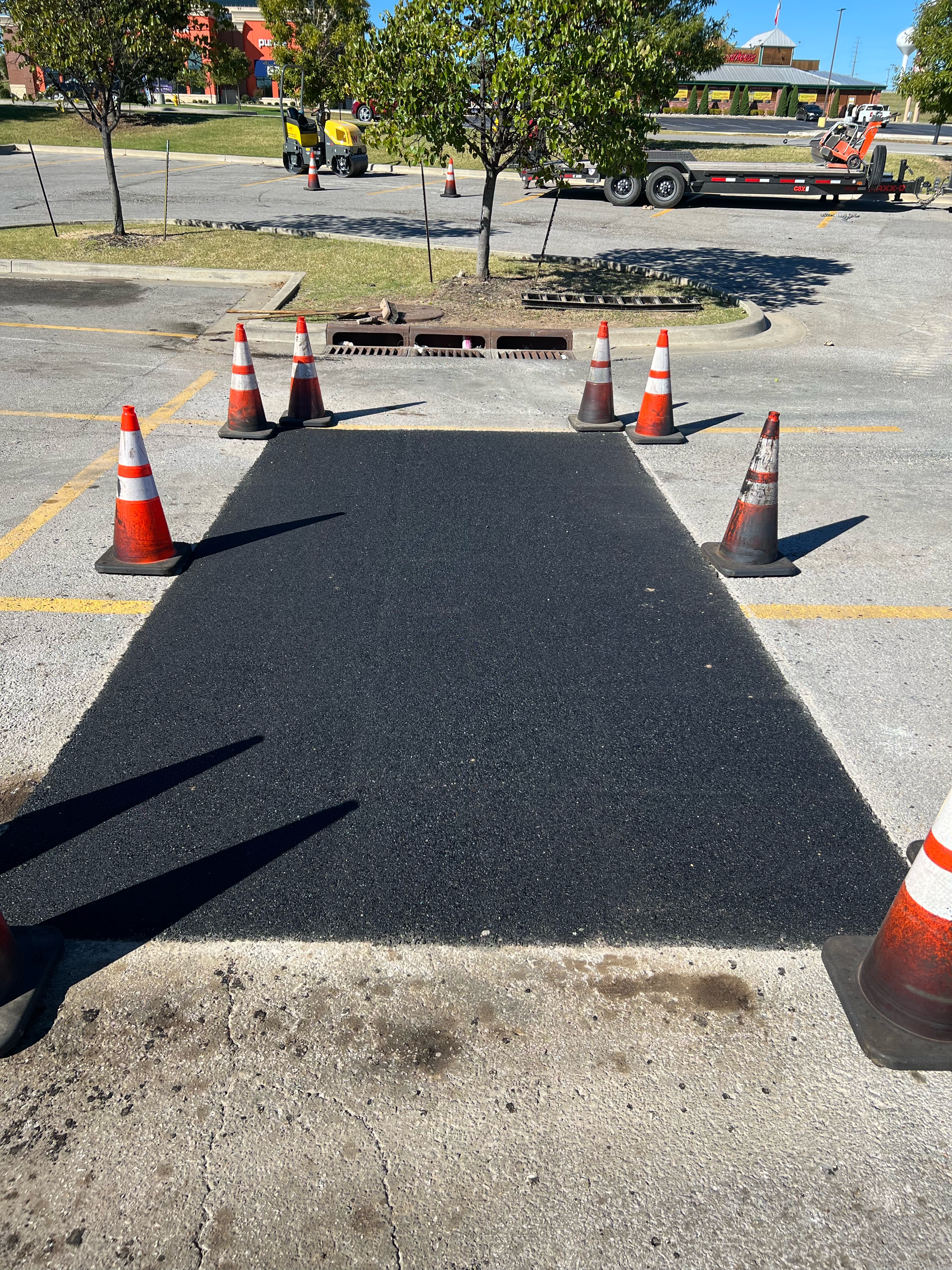
Asphalt patch repair at ALDI in Tulsa, Oklahoma

Focus the repair
Address isolated damage while retaining serviceable pavement.

Look below the surface
Consider base support and drainage before setting the scope.

Plan around access
Coordinate repair zones with parking and delivery needs.
Is patching the right next step?
A good fit
Isolated potholes or failed sections surrounded by serviceable pavement.
Evaluate first
Widespread cracking, recurring settlement or water problems may need broader repair.
Serving properties in Tulsa, Oklahoma City and Northwest Arkansas.
FAQ
Before you patch.
Can patching fix alligator cracking?
Localized failure may be repairable; widespread cracking needs assessment.
Why does the same pothole return?
Weak support or water problems can contribute to repeat failures.
Patch or repave?
The extent and depth of distress guide the decision.
GET A QUOTE
Tell us about your project and its location so we can understand what you need.
A CLEAR, STRAIGHTFORWARD APPROACH.
A clear path from here.
01
Assess the distress
Review damage, surrounding pavement and drainage.
02
Define the repair
Set limits and depth around actual conditions.
03
Repair and reopen
Confirm the approved scope and reopening instructions.
Plan access around each repair area
Mark potholes, broken edges and recurring soft spots before the site review. Note whether delivery trucks, turning vehicles or standing water affect those areas. Repair boundaries may extend beyond the visible hole to reach sound pavement. Discuss entrances, parking rows and delivery access so the work area can be isolated without sending traffic into an unfinished repair.
Look below the visible pothole
A patch should address the condition that caused the failure, not just its appearance. If the supporting material is weak or wet, the scope may need removal and base repairs before new asphalt is placed. Widespread deterioration may call for a broader asphalt paving assessment. View the project gallery for published RGW work.
Asphalt patching questions
How should repair areas be documented before a site visit?
Take both wide views and close-ups, and identify the affected entrances, parking rows or travel lanes. Include areas where a previous patch has failed. Photos help locate concerns, but on-site review determines repair limits and depth.
Why might a repair extend beyond the visible hole?
Broken edges and weak supporting material can extend beyond the opening at the surface. Reaching sound pavement and restoring support may require a larger repair area. Ask how those limits will be established and how unexpected conditions will be handled.
Can repairs be phased across a busy property?
Ask whether separate work areas are practical for the site. Share delivery schedules, essential entrances and accessible routes before staging is agreed. Some areas may still need a complete closure, so do not assume traffic can pass beside every repair.
What should be included in the estimate?
Ask which areas will be repaired, how removal and base work are handled, what access restrictions apply and whether replacement striping is included. Send the address, photos and heavy-vehicle requirements. Our Tulsa services page offers local service information.
Let’s talk about your property.
Asphalt. Concrete. Ongoing care.
Practical solutions for your property.
LOCATIONS SERVED
Tulsa
Oklahoma City
Northwest Arkansas
Southwest Missouri
Southeast Kansas
© 2026 Regional Groundwork. All rights reserved.