
ASPHALT MAINTENANCE
Treat the cracks before moisture reaches the layers below.
Crack treatment helps limit water entering through openings in asphalt. The right approach depends on crack movement, edge condition and the surrounding pavement.
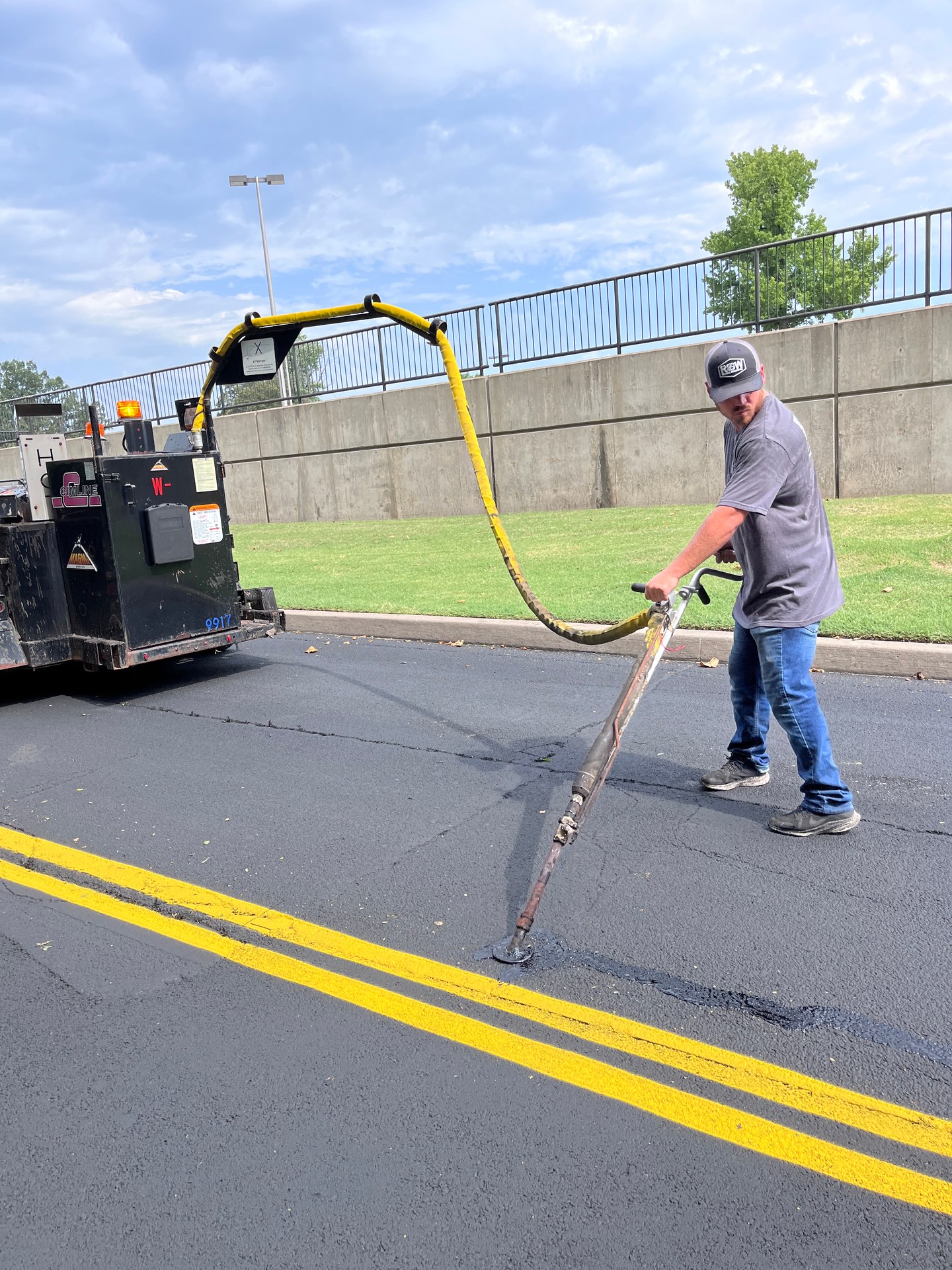
Crack filling at Rogers State University in Claremore, Oklahoma, with sealant applied along asphalt cracks beside the yellow pavement markings.

Limit water entry
Reduce a pathway for moisture into the pavement.

Match the movement
Crack movement guides filling or sealing.

Plan the sequence
Coordinate repairs and later surface maintenance.
Is crack treatment the right next step?
A good fit
Individual cracks in otherwise sound asphalt.
Evaluate first
Alligator cracking or settled areas may need deeper repair.
Serving properties in Tulsa, Oklahoma City and Northwest Arkansas.
FAQ
Before you fill.
Are filling and sealing the same?
No. Movement affects material and preparation.
Will this fix alligator cracking?
Structural damage may require pavement repair.
Will treated cracks disappear?
Treatment lines can remain visible.
GET A QUOTE
Tell us about your project and its location so we can understand what you need.
A CLEAR, STRAIGHTFORWARD APPROACH.
A clear path from here.
01
Assess
Review cracks and surrounding pavement.
02
Prepare
Plan cleaning for the selected treatment.
03
Treat
Match material, conditions and reopening.
Plan crack repairs before the next surface treatment
Point out cracks that have widened, returned after earlier repairs, or collect water. Include entrances, delivery routes and heavily used parking rows in the review. The crack pattern and surrounding pavement help determine whether filling is appropriate or whether a section needs asphalt patching. Coordinate crack work with any planned sealcoating and agree on traffic restrictions before work begins.
Match the treatment to the pavement
An isolated crack in otherwise sound asphalt calls for a different assessment than a network of broken, moving pieces. Filling can help limit water entry through suitable cracks, but it does not rebuild a weak base or restore pavement that has lost structural support. See the project gallery for published RGW work and discuss the conditions at your property.
Crack filling questions
What changes should I report between inspections?
Note cracks that widen, begin to break at the edges or develop into connected broken areas. Record recurring water and any new settling. Those changes can affect whether the next step remains crack treatment or requires a repair assessment.
Is crack filling the same as sealcoating?
No. Crack filling treats individual openings. Sealcoating is a surface maintenance treatment for suitable asphalt. If both are included, the estimate should identify the preparation and sequence rather than treat them as interchangeable services.
Can crack work be coordinated with other maintenance?
Tell us about planned patching, sealcoating or striping before work is scheduled. The condition of the pavement and the selected materials determine the preparation and sequence. Include access restrictions in the plan so different services are not treated as unrelated visits.
What should I send for an estimate?
Send the property address, wide photos showing the affected area, close-ups of representative cracks and any history of repeated repairs or standing water. Note your busiest hours and access requirements. Our Tulsa services page provides local service context.
Let’s talk about your property.
Asphalt. Concrete. Ongoing care.
Practical solutions for your property.
LOCATIONS SERVED
Tulsa
Oklahoma City
Northwest Arkansas
Southwest Missouri
Southeast Kansas
© 2026 Regional Groundwork. All rights reserved.