
You Fixed the Obvious. What About the Dangerous?
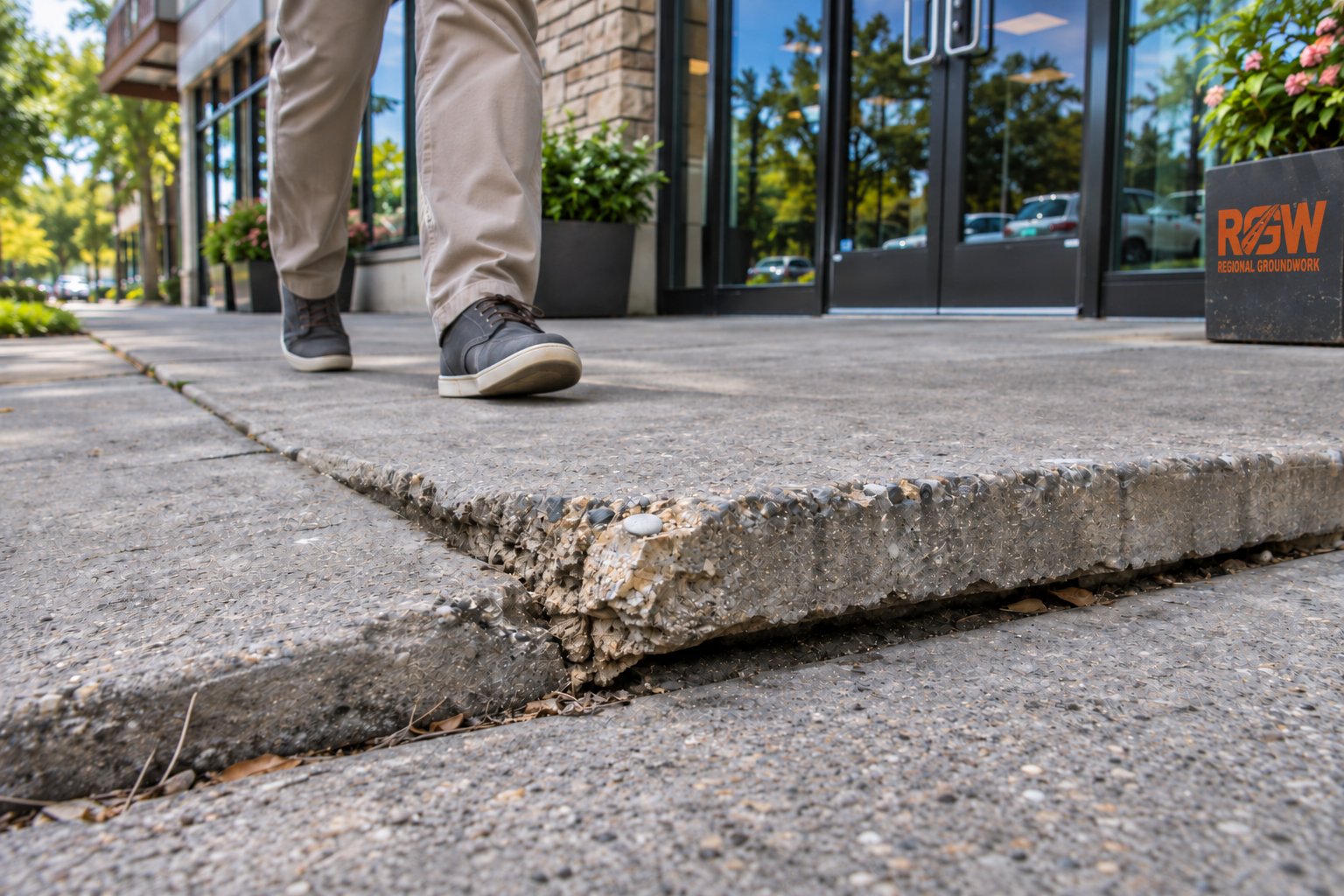
Cover image is illustrative, not a Regional Groundwork project photo.
A sidewalk panel has lifted. Someone suggests paint, someone else suggests grinding and another person thinks the panel should be replaced.
Before choosing a repair, look at the walking route around it. The edge you noticed is part of a larger path that people need to use.
Follow the route from parking to the entrance
Start where people park and walk to the door. Include the route from accessible parking, sidewalk joints, curb ramps, patched areas and the connections between asphalt and concrete.
Look from the direction people actually travel. A close photograph shows an uneven edge, while an approach photograph shows how someone encounters it with a walker, cart or stroller.
Give each concern a number on a site overview. Photograph the surroundings and the unevenness itself. Record a measurement where it is safe to do so and note whether the condition has changed.
Use measurements in context
A measurement helps describe a surface change. It should not be treated as a universal pass-or-fail test for safety or liability.
Accessible-route requirements also involve surrounding surfaces, slopes, clearances and connections. Have the applicable conditions reviewed by someone qualified to assess them.
The purpose of the initial record is to make the concern clear enough to evaluate, rather than to decide from one number that the entire route is acceptable.
Plan the immediate response separately
If a condition needs prompt attention, follow your property's process for protecting users and providing a usable route.
Paint may make an edge easier to notice, but it does not remove the unevenness. A barrier needs planning too. A detour should not send people around a sidewalk concern and into a drive lane.
Record the interim response, who is responsible for the next action and when the location will be checked again.
Ask why the repair method fits
Grinding, lifting and replacement address different conditions. The appropriate option depends on the panel, available material, support, movement, drainage and surrounding route.
Have the contractor explain why the proposed method fits and what would make it unsuitable. Useful questions include:
- If an edge is lowered, what happens to the remaining surface and transition?
- If a panel is lifted, how will it connect to the next panel?
- If a section is replaced, how will the finished work meet the surrounding route and manage water?
The repair should be evaluated beyond the edge in the photograph. Check the connections on both sides and the way people approach the area.
Make the proposal specific
Identify the location, repair limits, method, preparation and intended finished result. Include access arrangements, reopening requirements and how the outcome will be checked.
If further investigation is needed, distinguish that work from the repair price. Keep the numbered plan and photographs with the agreed scope so the people approving and checking the work share the same reference.
Check the route again after completion
Walk the same approach and compare the completed work with the agreed scope. Collect any specified measurements or review records, photograph the finished transitions and document remaining concerns.
Set a follow-up date. If the area moves again, the earlier photographs and repair records give the next discussion a useful starting point.
A practical maintenance record includes the location, observed condition, measurement where appropriate, interim response, assigned repair action and follow-up date. Find the concern, document it, assign a response and check the result.