
You don't need us if...
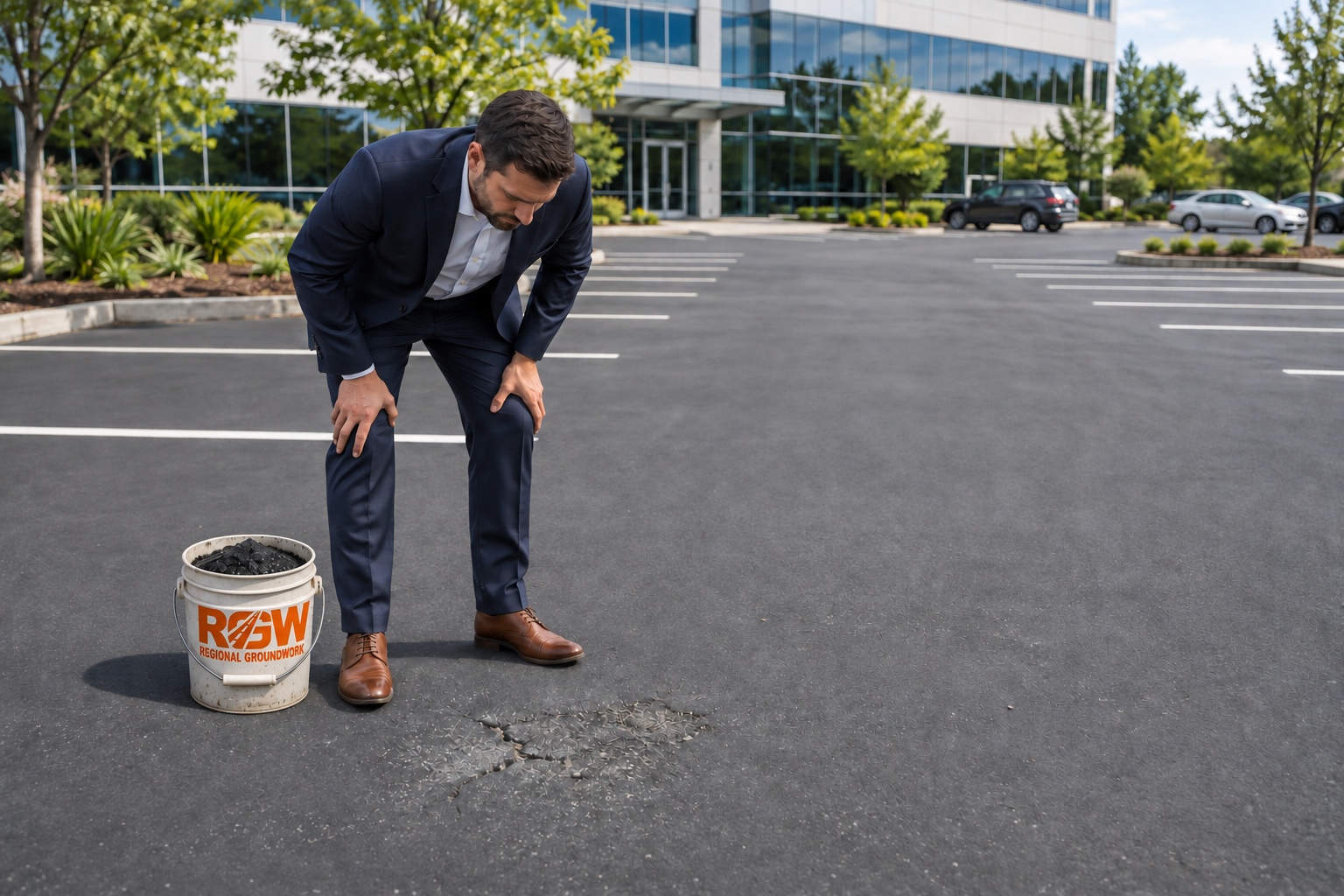
Cover image is illustrative, not a Regional Groundwork project photo.
Your maintenance team already handles doors, plumbing, landscaping and the unexpected jobs that arrive between them. Could a small asphalt repair fit into that work too?
For some isolated repairs, it may. The decision depends on the condition, the material, the preparation and the equipment your team can use safely. Start by understanding the work before buying a product or renting a compactor.
Check whether the damage is really a small repair
Look at the area and the pavement around it. Is it one isolated pothole, or part of a larger section that is breaking apart? Is the surface sinking? Has the same location been repaired before?
Take a wide photo showing the location and a close view showing the damage. Record the date and approximate dimensions. Note standing water, earlier patches and nearby turning or delivery areas.
Those observations help define the next step. They do not require your team to diagnose the cause from a photograph.
Match the product to the condition
Aquaphalt is one product discussed in our maintenance guidance for small pothole repairs. Preparation, water activation and compaction are part of its use. Follow the manufacturer's current instructions for the selected product, repair depth and conditions.
Before purchasing, measure the area and depth so the supplier can help you estimate the quantity and select the appropriate material. Confirm the preparation and tools your crew will need.
SealMaster's GatorPave is another product discussed in the guidance for certain cracked surface areas. Review the current technical sheet for suitable uses, preparation, application, weather conditions and drying requirements.
A surface patching material does not correct a failing base underneath the asphalt. If the pavement is moving, sinking or repeatedly breaking apart, pause before applying another surface treatment.
Count the full cost of doing it in-house
A contractor's price includes crew time, equipment and travel as well as material. For a suitable small repair, using your own team may avoid that mobilization expense.
Your team's time still has a cost. Include staff time, tools, material handling and any equipment rental when comparing the options. Confirm how the work area will be protected and how people and vehicles will remain separated from the work.
Also consider whether your staff has the experience to carry out the required preparation and application. Having a product available does not settle whether the repair suits the crew.
Recognize when the job needs a closer look
Larger repairs can involve removal, base work, hauling, asphalt from a plant and suitable compaction equipment. Renting a plate compactor does not, by itself, make that whole job manageable.
Consider the material logistics, access restrictions, preparation and experience involved. Recurring failure, widespread damage or uncertainty about the support below the pavement calls for a closer assessment.
If you bring in a contractor, use your photos and location numbers to ask for a clear explanation of the proposed repair, what it includes and what could require additional work.
Start with one manageable repair and keep a record
Choose one small repair that fits your crew's capability. Confirm the product, tools, current instructions and traffic protection before starting.
After the work, take a photograph from the same position. Keep it with the completion date and material used. That record gives your team something useful to compare during the next inspection.
The aim is to make a sensible decision about which jobs your maintenance team can take on and which ones need more assessment, equipment or experience.