

Fix Your Process Before You Fix Your Pavement
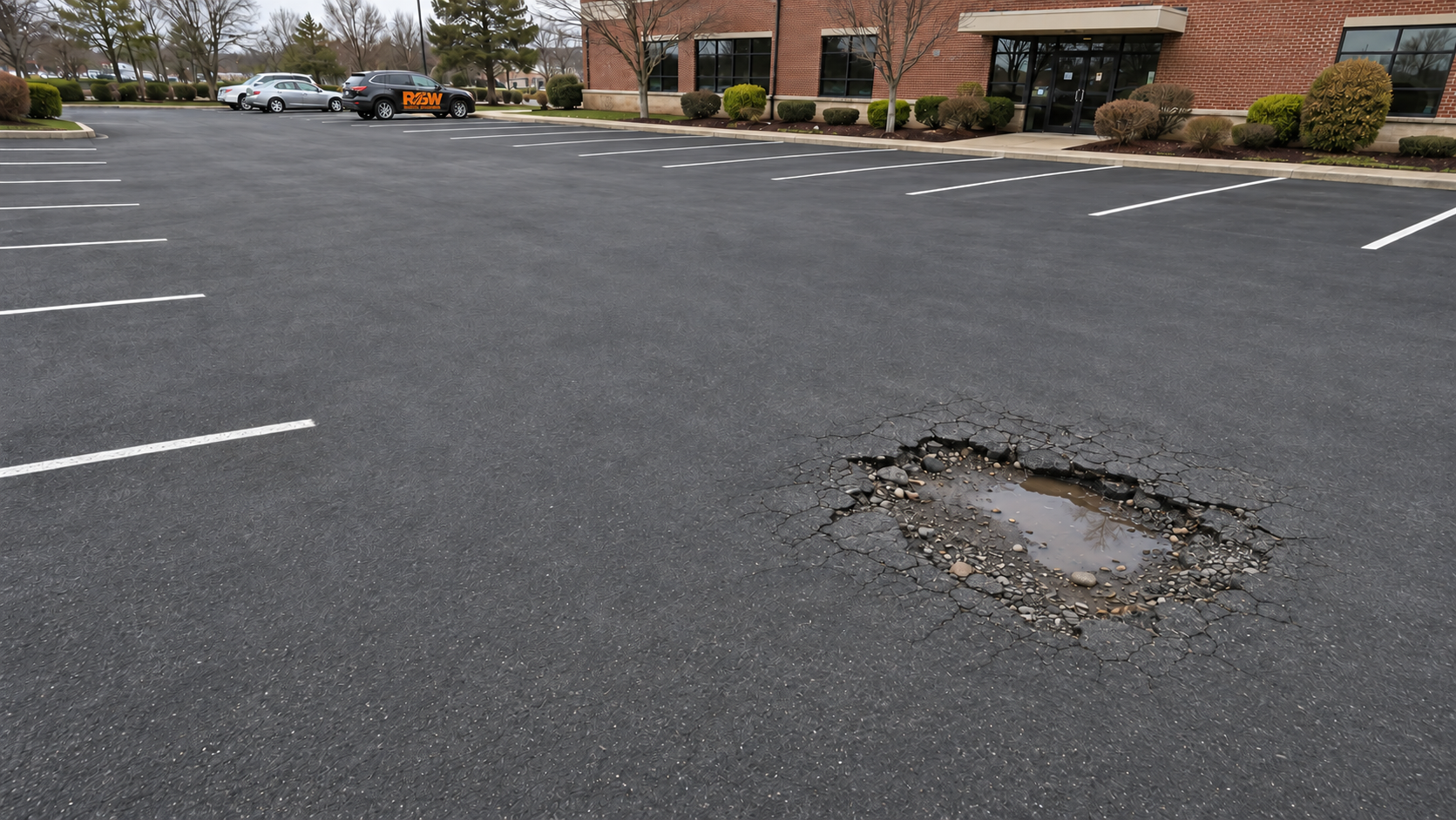
Cover image is illustrative, not a Regional Groundwork project photo.
You walk the parking lot and see three damaged areas. One has a hole, one has a web of cracks and one looks as though it has dropped.
They may all belong on the same maintenance list, but they may need different repairs. Before buying material or collecting quotes, give each area a clear description.
Your maintenance team can make a useful first pass without deciding what caused the failure.
Give each location a number
“Bad asphalt by the entrance” works until someone asks which entrance. Mark the location on an aerial image or simple site sketch and give it a number.
Use that number on photographs, work orders, proposals and follow-up records. A consistent reference makes it easier for everyone to discuss the same area, especially when several repairs are spread across a property.
Describe the visible condition
Write down what you can observe:
- Material missing from a hole.
- Connected cracks across an area.
- A depression or sinking section.
- An abrupt step where two surfaces meet.
- Loose or broken edges around an earlier patch.
These descriptions give the next person something specific to assess. A photograph can show the condition, but it cannot establish the cause by itself.
Take a wide view and a close view
The wide photograph should show the location and its surroundings. The close photograph should show the damage. Include a ruler or another scale where you can do so safely, then record the date and approximate dimensions.
Stay out of moving traffic and operating equipment. Follow your property's process for accessing and documenting the area safely.
Photographs are more useful when the reader can connect them to a location and a date. Keep them with the numbered site plan rather than leaving them as unidentified pictures on a phone.
Add nearby details without turning them into a diagnosis
Is water collecting there? Is an earlier patch visible? Do delivery trucks turn or stop in that location? Has the condition changed since the last inspection?
Record those observations plainly. “Water remains in this depression after rain” is useful information. Concluding that water caused the base to fail requires more support.
If a previous repair is known, keep its date and scope with the record. That history can help a contractor understand what has already been tried.
Separate the immediate response from the repair decision
If the condition needs prompt attention, follow your property's process for protecting the area and arranging a response. You do not need to finish diagnosing the pavement before recognizing that a damaged spot needs attention.
Then consider the permanent repair. A small, isolated defect may be manageable with the right product, preparation and equipment. Recurring failure, widespread damage, movement or uncertainty about support underneath deserves a closer assessment before another surface treatment is purchased.
Use the record when requesting help
Send the numbered plan and matching photographs with your repair request. Ask the contractor to explain what they observed, what still needs investigation and what the proposed repair will address.
A simple maintenance entry can include:
- Location number and description.
- Observed condition and approximate dimensions.
- Date, photographs and any water observations.
- Previous repair date and scope, if known.
- Next action, responsible person and follow-up date.
After the work, take another photograph from the same position and keep the approved scope and completion date with it. Your next inspection can start with a comparison rather than a fresh guess.